
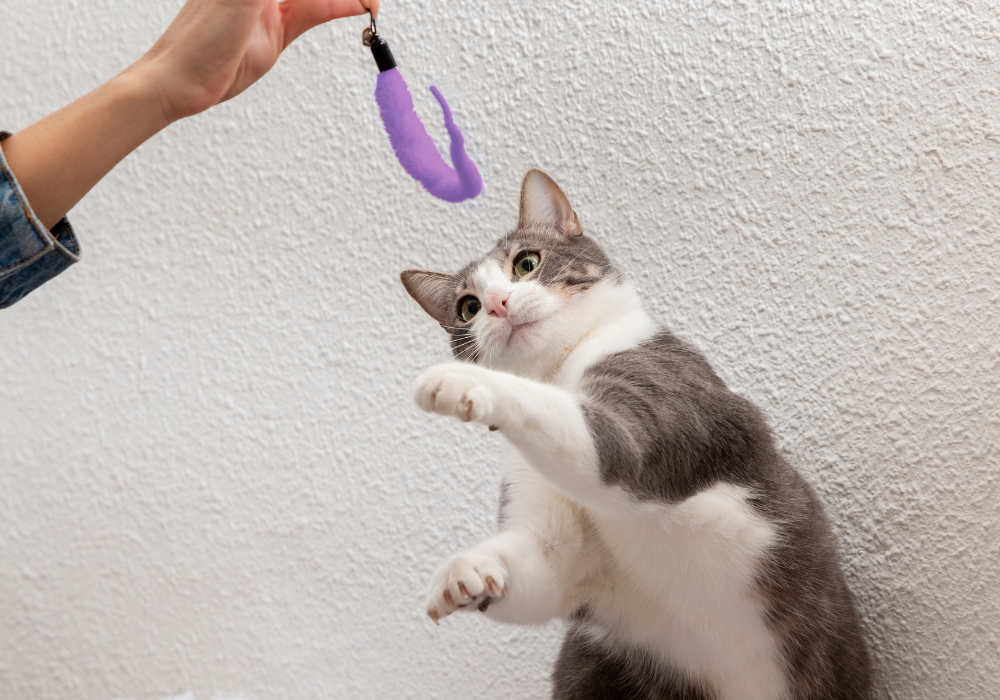
Just like humans, many dogs and cats show a “favorite” paw for playing, eating, or exploring. Your furry friend might be right-pawed, left-pawed... or even ambidextrous! But, how can you tell?
In this #PetTuesday we tell you how to find out with simple tests at home.
First, what does it mean for a pet to be right-pawed or left-pawed?
It means they tend to use one paw more than the other, to interact with their environment, to search for something, to play, among other things. This pattern is called laterality and is related to how the brain controls movements, just like it happens with people.
Do they really have a dominant paw? Yes, although not all of them. Veterinary studies have shown that, in the case of dogs, many clearly show a dominant paw, especially when performing repetitive tasks.
In the case of cats, the preference may depend on sex; males tend to be left-pawed and females right-pawed, although it is not a fixed rule.
There are even animals that use both paws equally, being called "ambidextrous" just like humans.
So, how do you know if your furry friend is right-pawed or left-pawed? At home, you can do small tests to observe which paw they use first or more often.
Here are 4 "tests" for you:
- Play with a ball, a mouse, or their favorite toy: observe which paw they use to hold or touch the toy. You can also lift it a little to see which paw they use first to try to reach it.
- Teaching them to shake a paw is a clear test where you will naturally observe which paw they use most
- Place a snack in a "difficult" to reach place or a narrow container and observe which paw they use to try to get it out
- When getting up from their bed or resting place, observe which paw they start walking with
Note: choose one test and repeat it several times a day to get a more reliable result.
Curiosities about pet laterality:
- The proportion of right-pawed and left-pawed individuals is not 50/50, just like in people.
- Some dog trainers use this information to teach more effective training routines.
- Knowing which paw is dominant can be useful in physical rehabilitation after an injury or in canine sports.
Belover, does your furry friend have a dominant paw? We'd love to hear from you...